 There’s always a point near the end of the growing season when the garden starts to feel different. As mornings become cooler, and days get shorter, plants that seemed unstoppable a few weeks ago are also beginning to slow down. This is your cue to start thinking about the first frost.
Wrapping up a garden doesn’t have to mean pulling everything out in one afternoon and calling it a year. In fact, there’s plenty you can do in these final weeks to extend your harvest, preserve what you’ve grown, protect plants worth keeping and give your soil a head start on next season.
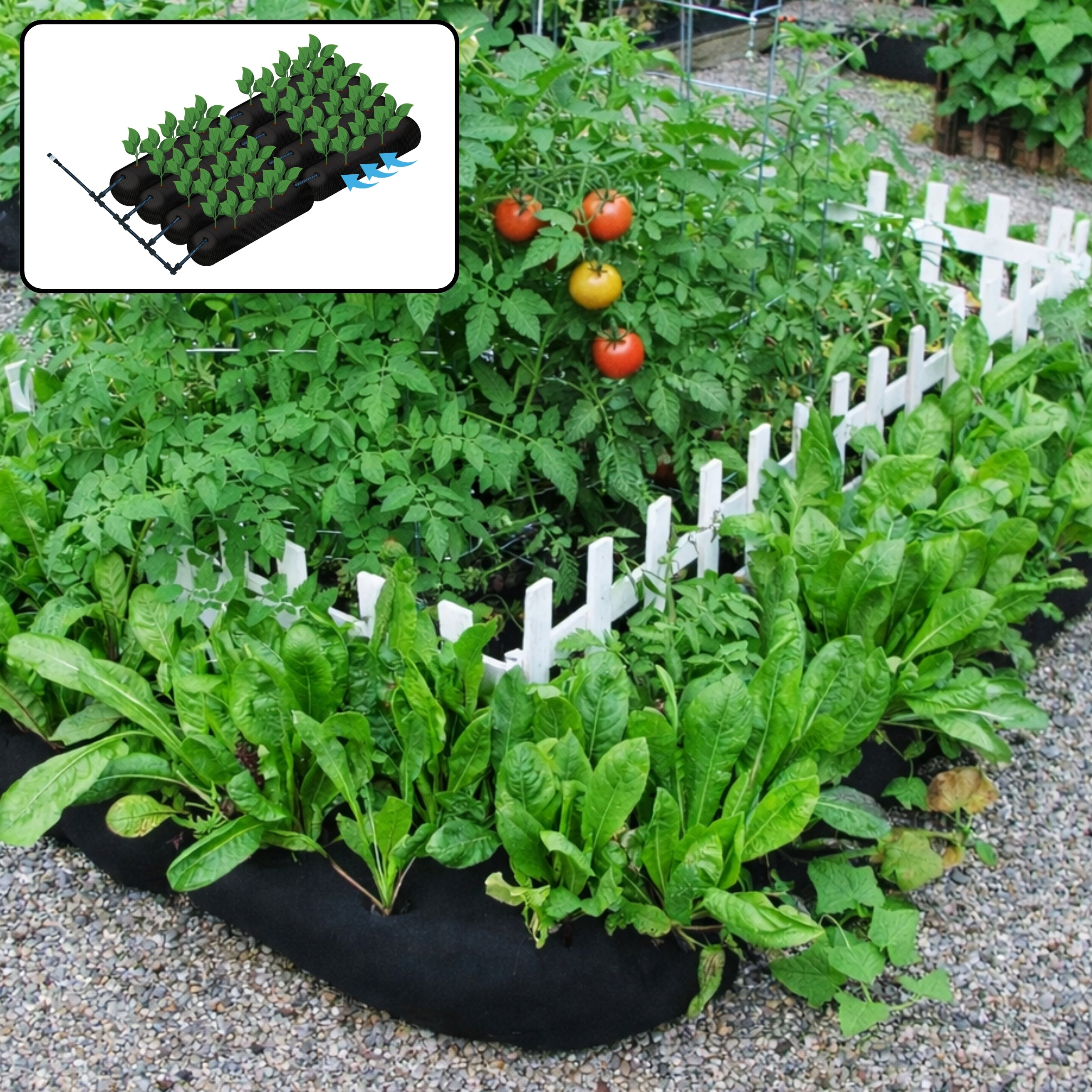
Whether you grow in traditional beds, containers or GardenSoxx®, here’s how to make the most of the transition from fall into winter.
Start by Knowing Your First Frost Date
Your average first frost date is a useful starting point, but remember that it’s an estimate and not a deadline written in stone. Weather can vary considerably from one year to the next.
As you get closer to that date, start watching your local forecast, particularly the overnight lows. This will help you decide which plants need to be harvested first and which can stay outside a little longer.
Also, there’s no need to clear the entire garden just because one cold night is coming. Many cool-season crops can tolerate chilly temperatures and even light frost. Lettuce, spinach, kale, carrots, radishes and other hardy crops may continue producing after more tender summer plants have finished.
Instead of ending the garden all at once, think of it as a gradual transition.
Harvest Your Tender Crops First
Tomatoes, peppers, basil and other warm-season plants are much less tolerant of cold temperatures. As frost approaches, these should move to the top of your harvest list.
 Pick ripe produce first, but don’t forget about what hasn’t ripened yet. Mature green tomatoes, for example, can often continue ripening indoors. You can also embrace them as they are, as green tomatoes have plenty of uses in the kitchen.
This is also a good time to make one final sweep through the garden for produce that’s easy to overlook. Check beneath leaves for peppers, beans, zucchini and anything else you might want to enjoy before temperatures drop.
Meanwhile, cold-tolerant crops can stay put. There’s no reason to harvest everything prematurely simply because summer is ending.
Make the Most of Your Herb Garden
If your herbs have spent the summer thriving, you may suddenly find yourself with far more rosemary, thyme, parsley or mint than you can reasonably use before frost. Luckily, herbs are some of the easiest garden harvests to preserve.
Woody or sturdy herbs such as rosemary, thyme, oregano and sage are excellent candidates for drying. Mint also dries well, particularly if you plan to use it for tea.
 More tender herbs such as parsley, chives, dill and cilantro generally retain their character better when frozen. Chop them and freeze them in small portions so you can easily add them to soups, sauces and other cooked dishes throughout winter.
Basil is a bit different than the others. Rather than trying to preserve the leaves exactly as they are, your best bet is to turn a large harvest into something useful. Make pesto, blend basil with olive oil, or create herb cubes and freeze them in small portions.
The garden may be winding down, but your harvest can keep showing up in the kitchen for months.
Don't Be Too Quick to Pull Everything Out
Once a plant has finished producing, the instinct is often to pull it out, roots and all. But if the plant was healthy, consider leaving those roots behind.
Cut the plant at soil level and allow its root system to remain underground. Over time, the roots will begin to decompose, returning organic matter to the soil and leaving behind channels that can contribute to soil structure.
There is one important exception: diseased plants. If a plant has experienced a significant disease problem, removing affected plant material is the safer approach rather than intentionally leaving it behind.
For GardenSoxx gardeners, leaving healthy roots in place is especially simple. Cut the finished plant at the mesh, remove the above-ground growth and leave the growing medium contained inside the GardenSoxx. There’s no need to empty everything at the end of each season.
Give Your Soil Something Back
A productive garden asks a lot from its soil. After months of supporting roots, foliage, flowers and fruit, your growing medium may benefit from some attention before the next growing season. But tired-looking soil doesn’t automatically mean you need to replace it.
Start with organic matter. After cutting plants back, adding some fresh compost to the planting holes is an easy way to begin replenishing the growing medium. Combined with the healthy roots left behind, this gives organic material time to begin breaking down during the off-season.
 This is particularly useful with GardenSoxx because the soil stays contained from one season to the next. Rather than treating the growing medium as something disposable, you can continue maintaining and improving it over time.
Think of soil health as an ongoing process rather than something you reset every spring.
Save the Bigger Soil Refresh for Spring
Not every garden task needs to be done in the fall. Once you’ve cleaned up the garden, left healthy roots behind and added compost where appropriate, you can allow the soil to rest over winter. Then, as planting time approaches in spring, take another look at what it needs.
This is a good time to add more compost or organic matter if necessary and introduce soil amendments for more targeted support.
Different amendments serve different purposes. Humic- and fulvic-based amendments can help support nutrient availability and root development. Biochar-based amendments can support soil structure, nutrient retention and microbial habitat. Seaweed extracts can also be useful as the new growing season begins, helping support plants during active growth and periods of environmental or transplant stress.
For GardenSoxx growers, liquid amendments are particularly convenient because they can be applied directly to the growing medium or incorporated into the irrigation system, depending on the product.
 The goal isn't necessarily to pile more and more products into your soil. It’s to keep building a healthy growing environment from one season to the next.
Decide What Needs Winter Protection
Not everything in the garden needs to disappear before winter. If you’re growing perennial herbs, strawberries or other cold-hardy perennial plants, you may be able to leave them outside for another season. Exactly how much protection they need will depend on the plant and your climate.
Plants growing in containers or other above-ground systems can sometimes experience colder root temperatures than plants growing directly in the ground. In very cold climates, additional insulation may therefore be helpful.
GardenSoxx planted with perennials can be covered with a protective layer of mulch to help insulate them from winter conditions. Because GardenSoxx sections are modular, you may also have another option: move manageable sections containing valuable perennials into an unheated garage, shed or another protected location for the winter.
You don't necessarily need a complicated winter storage setup. The goal is simply to provide additional protection when your climate and plant selection call for it.
Clear the Spaces You'll Need This Winter
This is also a good time to look beyond the plants themselves. Maybe your garden occupied part of the patio all summer. Perhaps you placed GardenSoxx along a walkway, beside a driveway or somewhere that will need to be accessible for snow removal.
With permanent garden beds, there's not much you can do about that. With a modular growing system, there is.
GardenSoxx sections can be moved to a more convenient location once the growing season has ended. If you know you'll need a particular walkway or patio area clear through winter, relocate manageable sections before they're frozen in place or buried under snow.
 GardenSoxx don't require special indoor storage simply because winter is coming. In most cases, they can remain filled and outdoors in a location where they won't be in the way.
Then, when spring returns, you can decide where you want your garden to go next.
Take Notes Before You Forget
Before you completely close the book on this year's garden, spend a few minutes thinking about what actually happened:
What grew exceptionally well? What struggled? Which plants produced more than you could eat? Which ones do you wish you'd planted more of?
Think about your layout, too. Did taller plants shade shorter ones? Was one area hotter than expected? Did you discover that you wanted your herbs closer to the kitchen? Would raising part of your garden onto a table or shelf make harvesting easier?
These little observations are easy to forget after several months away from the garden, so take a few photos and make some notes now.
One of the advantages of a modular system like GardenSoxx is that this year's layout doesn't have to become next year's layout. Sections can be repositioned, different crops can be grouped together, and the garden can continue adapting to your space and needs.
A disappointing season isn't necessarily a reason to start over. Sometimes it's simply information you can use to grow differently next time.
Let the Garden Rest
 Once the harvest is in, tender plants have been removed, herbs are preserved, healthy roots are left behind and the soil has received some fresh organic matter, there isn't much else you need to do. And that's a good thing.
Gardening isn't about keeping everything actively growing all the time. In colder climates, the off-season is part of the cycle.
Your soil doesn't need to be thrown away because it had a difficult year. Your GardenSoxx don't need to be emptied because winter is coming. And your garden doesn't need to look exactly the same when you plant again.
Harvest what you can. Preserve what you won't use right away. Leave healthy roots behind. Add organic matter. Protect what needs protecting. Then let the garden rest.
When spring comes around, you can refresh the soil, make a few changes based on what you learned and start growing again.
Because healthy soil, and a healthy garden, is something you build over time.