
When we think about improving garden soil, most of us think about what we can add to it: compost, fertilizer, worm castings or other nutrients that will eventually be used by our plants. These are all important parts of maintaining a productive garden, but there is another way to think about soil health that has less to do with feeding plants in the moment and more to do with creating a better growing environment over time.
Biochar is a carbon-rich material that can remain in soil for a remarkably long time. Rather than acting primarily as a source of nutrients, its value comes from the way it interacts with the soil around it, including water, nutrients and microbial life.
It's also far from a new idea. The relationship between charcoal and fertile soil stretches back centuries. Today, modern biochar products are taking that old concept and adapting it for growers who want a practical way to incorporate stable carbon into their soil.
CultiVital™ takes that adaptation one step further by putting ultra-fine biochar into a concentrated liquid form, making it much easier to introduce into an established garden.
But before getting into why that matters, it's worth looking at where the idea came from in the first place.
Biochar Has a Much Longer History Than You Might Think
Some of the most fascinating examples of carbon-rich agricultural soils are found in the Amazon Basin.

Researchers studying areas of unusually dark and fertile soil there identified what is now commonly called Terra Preta, or "dark earth." Unlike many of the surrounding tropical soils, these areas remained remarkably fertile and contained high concentrations of charcoal along with organic residues and other materials resulting from human activity.
These soils weren't created with the neatly packaged biochar products we have today, of course. Nor is modern biochar the same thing as Terra Preta. But the discovery and study of these carbon-rich soils helped renew interest in something people had apparently understood, at least practically, for a very long time: incorporating charred organic material into soil can change its characteristics in lasting ways.
Modern biochar is produced more deliberately.
Organic material, often wood or agricultural biomass, is heated at high temperatures in an environment with very little oxygen. This process is called pyrolysis. Instead of allowing the material to burn completely into ash, pyrolysis converts much of it into a stable, carbon-rich material.
At first glance, the result may simply look like charcoal. Its real appeal, however, becomes clearer when you look much closer.
What Makes Biochar Different?
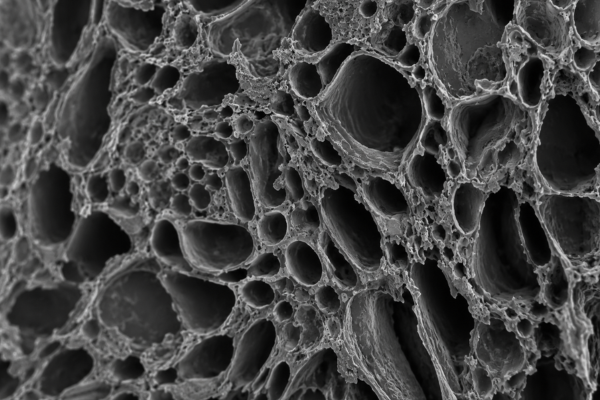
Biochar has an extremely porous physical structure, with countless tiny spaces and surfaces throughout the material.

Think of it a little like a microscopic apartment complex within the soil. All of those nooks and crannies create places where water, nutrients and microorganisms can interact.
This is one of the reasons it's important not to think of biochar as fertilizer. Adding biochar doesn't replace the nutrients your plants need, nor does it compensate for poor soil, inadequate watering or a lack of organic matter.
Instead, it can help improve the environment where all of those things come together.
Its porous structure can provide habitat for soil microorganisms. Its surfaces can interact with nutrients and other compounds within the soil, while its physical properties can also influence how water is retained and moves through the growing medium.
Of course, soil is complicated. The effects of biochar can vary depending on what the biochar was made from, how it was produced, how much is applied and the characteristics of the soil itself. There isn't one universal response that will occur in every garden.
A better way to understand its role is to think of biochar as part of the infrastructure of healthy soil, rather than something that directly feeds the plants growing in it.
There's One Catch With Traditional Biochar
For all of its interesting properties, traditional dry biochar isn't always the most convenient amendment for a home gardener.
It can be dusty and messy to handle, and incorporating it evenly into an existing garden can be difficult without digging or disturbing the soil. That's relatively easy when you're building a new garden bed from scratch. It's much less appealing when your tomatoes, peppers and herbs are already happily growing there.
There's also the question of "charging" biochar.
Because fresh biochar has so much available surface area, gardeners will sometimes mix it with compost, compost tea or other nutrient- and microbe-rich materials before adding it to their soil. This allows those porous surfaces to begin interacting with beneficial compounds and organisms before the biochar is incorporated into the garden.
None of this makes traditional biochar impractical, but it does create more work.
What Happens When Biochar Goes Liquid?
CultiVital™ is a concentrated liquid soil amendment made with 60% activated, ultra-fine softwood biochar and 40% Leonardite humate.

The biochar particles are approximately five microns in size. For some perspective, that's considerably smaller than the width of a human hair.
Reducing biochar to particles this fine means it can be suspended in water and applied to the garden as a liquid rather than having to physically work chunks of dry material through the soil.
For an established garden, that's a pretty significant advantage.
CultiVital can be diluted and applied as a soil drench or through compatible irrigation equipment, allowing the tiny biochar particles to move into the growing medium without requiring you to dig around established roots or rebuild the bed.
The liquid format doesn't change what biochar fundamentally is. What it changes is how easily you can get it where you want it.
Why Add Humates?
The other part of the CultiVital formula comes from Leonardite, a naturally occurring, highly oxidized form of ancient organic material that is rich in humic substances.
Humates are widely used in soil management because of the ways they interact with nutrients, soil chemistry and the root-zone environment. Combined with biochar, they create a formulation that brings together stable carbon and humic material in one concentrated application.
We could go very deep into the chemistry of humic substances here, but that's really a topic of its own. The important distinction is that CultiVital isn't simply liquid fertilizer with some charcoal added to it. Its purpose is to support the growing environment itself.
That becomes especially relevant when we're talking about GardenSoxx.
Why Biochar Makes Sense in a GardenSoxx Garden
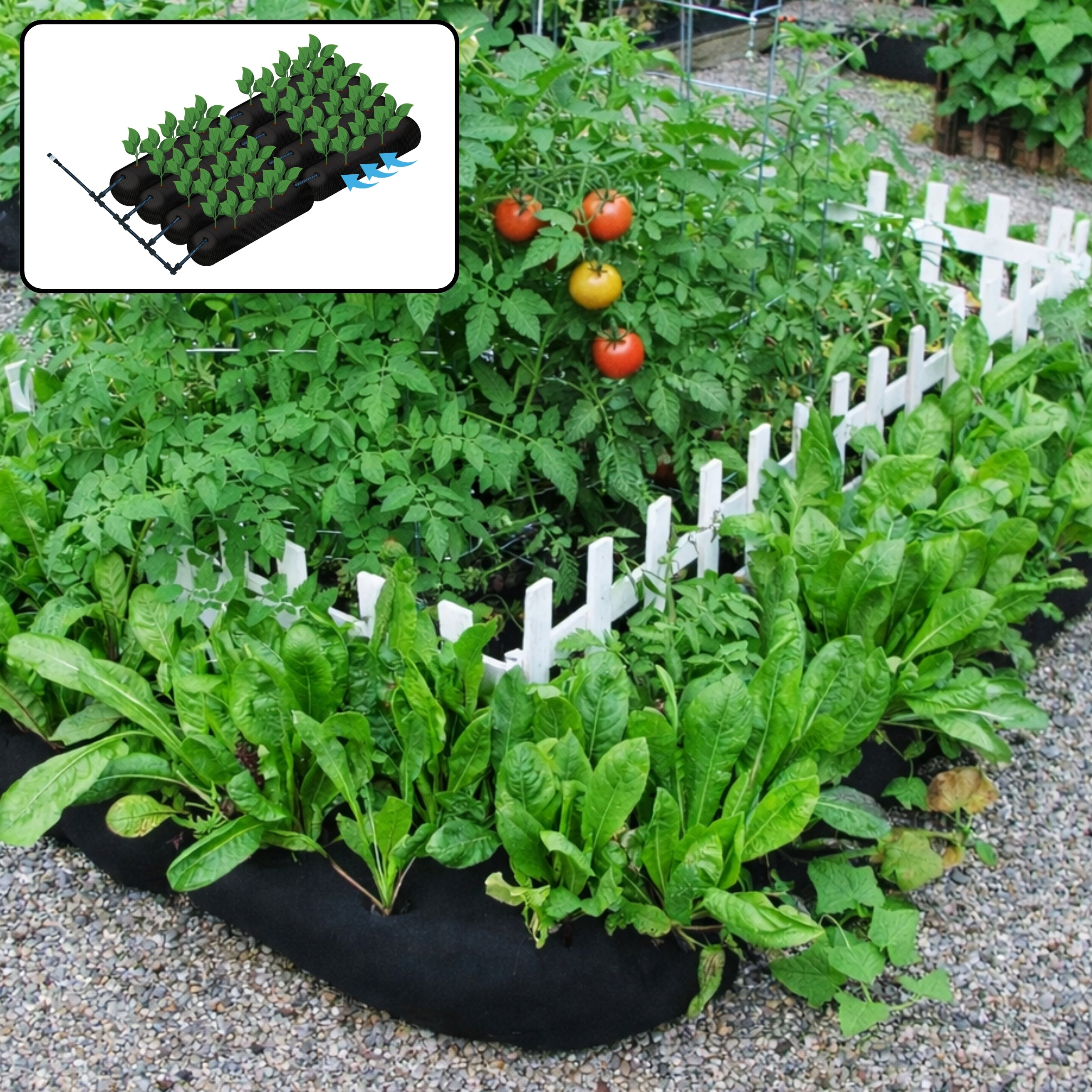
One of the advantages of growing in GardenSoxx is that you're working with a very defined root zone.
Rather than planting into a huge volume of native soil, you choose the growing medium that fills your GardenSoxx and create the environment your plants will grow in. The mesh allows air to move around that growing medium, while drip irrigation delivers water directly into the root zone.
That also means the soil inside your GardenSoxx is worth looking after.

As a GardenSoxx garden matures through the season, roots spread throughout the growing medium, plants draw on available nutrients and microbial communities continue to develop. Digging everything up simply to add an amendment would defeat the purpose of having an established root system.
A concentrated liquid amendment offers another option.
CultiVital can be delivered with water into that existing growing medium, making it possible to introduce ultra-fine biochar and humates without pulling plants out or disturbing their roots.
It can be useful during an active growing season, but there's another GardenSoxx application that may be even more interesting: taking care of soil from one season to the next.
Your Garden Soil Doesn't Have to Be a One-Season Resource
At the end of the growing season, it's tempting to look at used soil as something that has been "spent."
In reality, soil is constantly changing.
Plants have removed nutrients, roots have grown and decomposed, microorganisms have been active and organic matter has continued to break down. The soil may need attention before another heavy growing season, but that doesn't automatically mean it needs to be discarded.
GardenSoxx growing media can be refreshed and reused.
Depending on its condition, that might mean removing old plant material, adding fresh compost or organic matter, replacing nutrients that have been depleted and continuing to support the biological and physical qualities of the growing medium.
This is where biochar's long-term nature fits particularly well.
Instead of thinking only about what your next crop needs to consume, you're also thinking about the soil you're building beneath it. Stable carbon isn't there for one harvest and then gone. It becomes part of the environment you're continuing to maintain.
For gardeners who reuse the soil in their GardenSoxx year after year, that shift in perspective is worthwhile.
You're not simply filling a container. You're building soil.
Using CultiVital in the Garden
Despite all of the science behind biochar, using CultiVital itself is relatively straightforward.
For GardenSoxx, the recommended application is 6 oz for a 4 × 4 GardenSoxx Kit and 12 oz for a 4 × 8 Kit. The concentrate is diluted with water and can be applied as a soil drench or through compatible irrigation equipment.
Because the ingredients naturally settle, the bottle should be shaken well before use. CultiVital should also be protected from freezing.
It's compatible with fertilizers, compost teas and soil inoculants, making it relatively easy to incorporate into an existing garden routine. If pre-emergent herbicides have been applied, however, the manufacturer recommends waiting two to three weeks before applying CultiVital.
And while we naturally talk about it in relation to GardenSoxx, that's certainly not the only place it can be used.
CultiVital can also be applied to raised beds, conventional garden beds, containers, houseplants, lawns, trees and transplant areas. This is one of the main advantages of putting biochar into a liquid form: it becomes much easier to introduce into soil that's already being used.
So, Which Soil Amendment Does Your Garden Need?
If you've looked through the GardenSoxx soil amendment collection, you may have wondered why there are several products rather than one all-purpose garden booster.
The answer is that they're not really intended to do the same job.
Our Seaweed Extract is more directly focused on supporting the plant, particularly root development, environmental stress response, flowering and fruiting.
Kaytonik® contains concentrated humic and fulvic substances and is used to support nutrient availability, microbial activity and the overall soil environment.
CultiVital brings something different to the equation: ultra-fine activated biochar and stable carbon, combined with Leonardite humates, to support the physical and biological environment of the root zone.
Depending on your garden and your goals, these products can be used as different tools rather than competing solutions.
And none of them replace the basics.
Healthy plants still begin with good growing media, adequate nutrients, proper watering, enough sunlight and regular attention from the gardener.
Sometimes Better Gardening Is About Playing the Long Game
It's easy to judge a garden product by what happens immediately after we use it.
Did the leaves get greener? Did the plant grow faster? Did we get more tomatoes?
But soil doesn't always work on that kind of timeline. Some of the most worthwhile things we can do in the garden are less about getting an immediate response from a plant and more about creating an environment where plants can continue to thrive.

That's what makes biochar such an interesting amendment.
Its story stretches from carbon-rich soils created centuries ago to modern research into soil health and stable carbon. Now, concentrated liquid formulations are making the same basic concept much easier for everyday gardeners to put into practice.
For GardenSoxx growers, CultiVital offers another way to think beyond a single plant or a single harvest. Start with good growing media, take care of it as your garden grows, refresh it when necessary and continue building on what you've created.
After all, we spend a lot of time caring for what's growing above the soil.
Sometimes it's worth investing just as much thought into what's happening underneath it.