A Guide to Water-Efficient Gardening
If you've ever stood in your garden wondering whether your plants need another watering or if it's best to leave them alone for the day, you're not alone. Knowing how much water a garden actually needs is a common challenge gardeners face, and unfortunately, the answer is dependent on many factors and really isn’t a one-size-fits-all.
The amount of water your plants need depends on a whole list of factors like temperature, rainfall, soil quality, and the stage of plant growth. Newly planted seedlings in cool spring weather have different needs than mature tomato plants that are working on producing fruit during a summer heat wave.

And it’s not just about how much water you’re using, but how efficiently it reaches your plants - and the risks associated with giving too much water vs too little.
Why Efficient Watering Matters
Water is one of the most valuable resources in any garden, and in many regions it's becoming increasingly important to use it wisely. Drought conditions are becoming more common, water restrictions are affecting more communities, and water costs continue to rise. Gardeners need to be mindful about their water use, even on an individual basis.
Fortunately, there are ways to do that, still growing healthy plants while remaining efficient and using less water overall. And being efficient doesn’t mean depriving your plants of moisture, but rather making sure that more of the water applied actually reaches the root zone of the plants and can be properly used by them.
Spraying water broadly across a garden can lead to a surprising amount of waste in the way of evaporation, runoff or landing in surrounding areas where the water does not benefit your plants directly. Watering freely with a hose can also result in water droplets landing on plant foliage instead of the soil and increase the risk of fungal disease and other moisture-related issues.
This is where watering methods and consistent observation can make a significant difference.
The GardenSoxx Approach to Water Efficiency
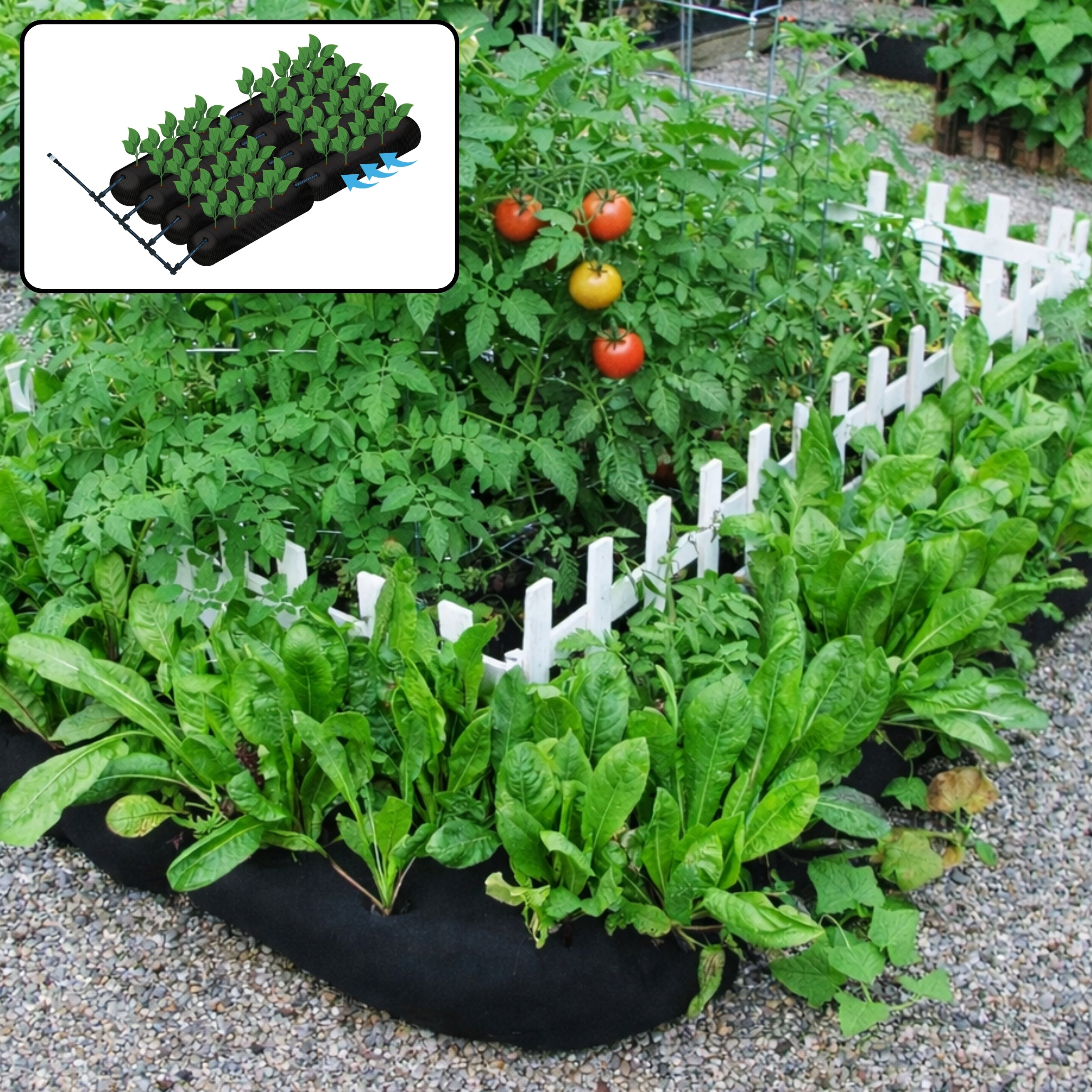
At GardenSoxx, we truly believe that growing food should be productive, simple, and resource-conscious. That's why every GardenSoxx system includes a convenient drip irrigation kit designed to deliver just the right amount of water directly to the root zone, leaving foliage dry.

We typically recommend running the drip system three times per day, for around 5 minutes per cycle. Based on our estimates, the drip line uses approximately 0.17 gallons during each five-minute watering, for a total of just 0.51 gallons per day.
To put that into perspective, a standard garden hose can use approximately five gallons of water per minute. Just five minutes of watering with a hose can use roughly 25 gallons of water, and much of that water may never reach the roots of your plants. Plants generally perform best when moisture levels remain consistent rather than swinging between extremely dry and completely saturated.
Ensuring that water flows exactly where it's needed not only improves efficiency but also helps reduce evaporation and keeps foliage drier, creating a healthier growing environment overall.
Hand Watering Can Work Too
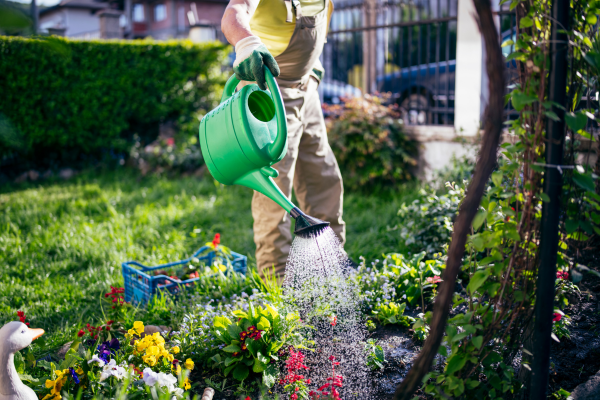
While we strongly recommend the drip irrigation system as one of the most efficient ways to water with GardenSoxx, some gardeners prefer to water by hand, which is perfectly fine too. Some may not have access to an outdoor water faucet or hose, or may have their GardenSoxx in an area where it is more convenient for them to water by hand.
Hand watering can be a great way to spend time observing your plants and identifying potential issues before they become larger problems.
If you choose to water manually, we generally recommend using a watering can whenever practical. It provides greater control and helps keep water concentrated within the growing media. A hose can certainly work as well, but it's easier to accidentally overwater or spray foliage unnecessarily.

Regardless of the method you choose, try to water the soil rather than the leaves, and water during the early morning whenever possible. This gives plants time to absorb moisture before the heat of the day while minimizing evaporation losses. During particularly hot periods, another watering around sunset may be necessary - check the soil and look for any drooping plant foliage to know for sure what your garden needs.
Soil, Roots, and Moisture Retention
One of the biggest factors affecting how much water your garden needs is actually the soil that the plants are growing in. A high-quality, healthy and structured soil is like a reservoir that can hold moisture long enough for plant roots to access it while still allowing air to circulate through it. While poorly structured soils may dry out too quickly or become compacted and shed water rather than absorb it.
This is why soil quality plays such a major role in water-efficient gardening. It is always recommended to start with a quality soil or compost that will allow for adequate water retention without becoming water-logged. If the soil quality is not up to par, adding organic matter and soil amendments can significantly improve moisture retention. Products like Kaytonik can help improve soil structure, allowing the growing media to hold moisture more effectively while remaining well-aerated.

As plants grow, their root systems will also contribute to improving the soil structure. Over time, roots help create pathways that improve water movement and retention throughout the growing media. This means that the watering schedule that worked at the beginning of the season may need to be adjusted as the season wears on.
For this reason, it's important to periodically check soil moisture and adjust watering as your plants grow.
Adjusting for Weather and Seasonal Changes
In addition to the common debate over the amount of water a garden needs, the frequency of watering is also a popular concern among gardeners. Again, the answer to "How often should you water a garden?" can be varied and isn’t always straightforward. As we know, weather can be unpredictable and fluctuate tremendously over the course of the growing season.
Periods of extreme heat, strong winds, or intense sun, may require more frequent watering because moisture is lost more quickly from both the soil and the plant itself.
During cooler weather, cloudy periods, or rainy stretches, plants generally require less supplemental watering. Continuing to water heavily during these periods can lead to overly saturated soil and stressed roots.
Instead of sticking to the same schedule all season long, start paying attention to the weather conditions and take time during the season to check the soil itself. In fact, your finger is often a better watering guide than any schedule. Check the soil a few inches below the surface and you'll get a much clearer picture of what your plants actually need.
If the soil feels consistently soggy, you may be overwatering. If it's dry several inches below the surface, your garden needs more water. Learning to adjust your watering based on actual conditions is a valuable skill for gardeners to work on developing.
Watering Smarter, Not More
Watering your garden both successfully and efficiently has less to do with gallons and minutes and much more to do with consistent observation. Healthy soil, strong root systems, and efficient water delivery all work together to help plants thrive while reducing waste.

Whether you're growing in a GardenSoxx system, a raised bed, or a traditional in-ground garden, the same principle applies: healthier plants start with smarter watering.
By focusing on water efficiency rather than simply using more water, gardeners can grow healthier plants, conserve resources, and create a more sustainable garden season after season.